Book eligible cars across Romania and settle the balance with debit card or cash at pickup.
Romania stretches from the Carpathian Mountains to the Danube Delta, a country where distances demand independent mobility and rental cars in Cluj Napoca, Bucharest, Timisoara and ten other cities open every corner. Brasov to Sibiu runs 145 km along the Olt valley, Bucharest to the Black Sea coast measures 225 km on the A2 motorway, and the drive from Oradea to Sighisoara crosses 280 km of hills and farmland. Public transport links cities but leaves mountain passes, painted monasteries and fortified churches out of reach, so visitors who hire a car in Romania gain the freedom to stop at wooden gates in Maramures, photograph Saxon towers in Sighisoara and climb the switchbacks of the Transfagarasan without waiting for a tour operator.
4Drive Romania offers car rental in Romania with no deposit and no credit card required on eligible vehicles, a booking structure that removes the credit-card barrier and the temporary hold of several hundred euro. When you search for a car, each model displays payment terms in the results: cars marked "No Deposit" accept a debit card or cash for the balance at pickup, so renters without a credit card can book a Dacia Sandero in Bacau, a Skoda Octavia in Cluj-Napoca or a Duster SUV in Brasov and pay the remaining amount with Visa Debit, Maestro or banknotes. The excess - the portion not covered by standard protection - still applies, but no funds are frozen on your account during the rental period.
At the time of booking you pay a small advance online by card to confirm the reservation; the system accepts debit and credit cards for this upfront payment, and the receipt appears in your inbox within minutes. The balance is due when you collect the keys, and the payment method for that balance depends on the specific car you selected - some accept debit cards, others require a credit card for the excess, and a few take cash. Every search result states the allowed methods, the voucher repeats them, and our team at [email protected] answers questions about Klasswagen Romania availability or one-way rentals between cities.
Pickup happens at Henri Coanda Airport OTP - 18 km north of central Bucharest via DN1 and the A3 motorway - at Avram Iancu Airport CLJ in Cluj-Napoca, Traian Vuia Airport TSR in Timisoara, or at downtown offices in Iasi, Sibiu, Brasov, Oradea and smaller cities. Local rental companies hand over the vehicle, conduct a walk-around inspection to note existing scratches, record odometer and fuel level in the contract, and provide a contact number printed on the voucher. You sign the agreement on site, receive the keys, and drive away on Romanian roads that swing right, observe urban limits of 50 km/h, and require a motorway vignette - the Rovinieta - for national roads and motorways.
We work with established rental operators in every major Romanian city to offer transparent terms, flexible payment and straightforward cancellation, so travellers who rent a car in Cluj Napoca Romania or search for rental cars in Bucharest find the conditions they need without hidden clauses.
Select vehicles carry a "No Deposit" badge in search results, meaning the local supplier will not place a hold on your card when you collect the keys. The excess remains part of the contract, but your account stays untouched during the trip.
Eligible cars accept debit cards or cash for the balance payment at pickup, removing the credit-card requirement that blocks many renters. Check each result for the payment badge and book with the card type you carry.
Pay the advance online with any card, then settle the balance with Visa Debit, Maestro or banknotes when you sign the contract. The voucher lists which methods the supplier accepts for that specific vehicle and location.
Change your plans free of charge up to the cancellation deadline printed in your confirmation email. The advance is refunded to the original card, so you can rebook for a different city or adjust dates if your itinerary shifts.
Collect your car at Otopeni OTP, Cluj CLJ or Timisoara TSR airports, at downtown desks near the railway station, or arrange hotel delivery in Bucharest, Brasov and Sibiu. Select the pickup point during search and confirm the time in the booking form.
The Romanian market leans toward manual gearboxes, but automatic versions of the Opel Corsa, Skoda Octavia and Renault Captur appear in larger cities. Use the transmission filter to view self-shifting models for relaxed motorway cruising.
From alpine switchbacks to delta waterways, Romania rewards drivers who venture beyond the capital and follow rural asphalt into regions that rail timetables ignore.
The DN7C climbs 90 km from Curtea de Arges in the south to Cartisoara in the north, crossing the Fagaras Mountains at 2,042 metres and threading hairpins above Balea Lake. Open roughly June to October, the road demands concentration on tight curves and narrow shoulders; allow three to four hours one-way from Bucharest - about 170 km to Curtea de Arges via the A1 motorway, then DN7C. A compact car handles the tarmac, but a Dacia Duster or crossover with higher clearance feels safer on broken edges and gravel pullouts. Fuel stations cluster at the base; carry snacks and check weather before you start. The lake sits near the summit, reachable by cable car or a short walk from the roadside parking. Combine the pass with a stop in Sibiu, 80 km west of the northern exit, to split the drive and explore the old town squares.
Brasov lies 170 km north of Bucharest along the A3 and A1 motorways, a journey of two to two and a half hours through the Prahova valley and past Sinaia. The city serves as a base for Bran Castle - 30 km south-west on DN73 - and the ski resorts of Poiana Brasov. A Renault Clio or Ford Focus offers enough luggage space for weekend bags and comfort on the motorway; families may prefer a Skoda Octavia wagon. Park near Piata Sfatului in the centre and walk the pedestrian streets, or drive to Bran mid-morning when tour coaches arrive later. The castle perches on a rock above the village; ticket queues grow after 11:00, so early departure from Brasov helps. Return via Rasnov Fortress, 15 km north-east, for panoramic views over the valley. In winter, rent a car in Brasov with winter tyres and chains if you plan mountain roads; in summer the same routes dry out and fill with cyclists and hikers.
Sibiu sits 280 km north-west of Bucharest via the A1 motorway, a three-and-a-half-hour drive through Pitesti and Ramnicu Valcea. The city's Saxon centre - three linked squares, an iron bridge and painted houses - fills a day of walking, and the southern approach offers a springboard for Transfagarasan from the north or the Transalpina DN67C to the west. The Transalpina reaches 2,145 metres at Urdele Pass, open roughly June to October, and connects Sebes near Sibiu to Targu Jiu over 148 km of gravel and asphalt. A Duster or another SUV suits the unpaved stretches; a hatchback manages in dry conditions but struggles on washboard sections. Allow four hours one-way and fill the tank in Sebes or Novaci - fuel stations vanish along the ridge. Combine Sibiu with a night in Sighisoara, 100 km north-east on DN14, to see the hilltop citadel and clock tower before looping back to Bucharest or continuing north to Cluj-Napoca.
Sighisoara occupies a hill in central Transylvania, 290 km north-west of Bucharest and reachable in four hours via the A3 to Brasov, then DN13 north through Fagaras and the Olt valley. The fortified upper town preserves nine towers, cobbled lanes and the Clock Tower museum; cars park below the walls and visitors climb on foot. Rent a car in Cluj Napoca Romania and drive 120 km south-east - about two hours on DN15 and E60 - to visit Sighisoara as a day trip, or base yourself here and radiate to Biertan fortified church 30 km west, Viscri Saxon village 40 km east, and the Praid salt mine 70 km north. A Renault Clio or Opel Corsa provides easy parking and efficient fuel consumption; larger groups fit a Dacia Jogger seven-seater. Roads around Sighisoara mix asphalt with gravel tracks leading to villages; a standard hatchback suffices unless you plan forest roads, where a Duster adds confidence. The citadel hosts a medieval festival in late July; book accommodation and vehicles weeks in advance.
Bucovina lies in the north-east corner, centred on Suceava and Gura Humorului, about 440 km from Bucharest - six to seven hours via the A3 to Bacau and E85 north. Eight UNESCO-listed monasteries - Voronet, Humor, Moldovita, Sucevita, Arbore, Patrauti, Probota and Suceava - dot a radius of 50 km, their outer walls covered in 15th- and 16th-century frescoes. A loop from Suceava covers the main four in a day: Voronet 35 km south-west, Humor 5 km further, Moldovita 20 km west, Sucevita 20 km north. Narrow roads and village traffic slow progress; allow 30 minutes between sites. Rent a car in Iasi - 130 km south on E85 - and drive north, or fly into Suceava SCV and collect a vehicle at the airport or city office. A Ford Focus or Skoda Octavia handles asphalt and gravel monastery access lanes; families appreciate the wagon's luggage capacity forikon purchases and picnic supplies. Fuel stations line E85; smaller villages sell basics but limited restaurant choice, so carry water and snacks.
The delta spreads 290 km north-east of Bucharest, accessed via Tulcea on the A2 motorway to Constanta and DN22 north - about four to five hours. Cars reach Tulcea, Murighiol or Sfantu Gheorghe, where boat trips explore channels, reed beds and birdwatching hides; the interior permits only small vessels and canoes. A compact car like a Dacia Sandero covers the highway and local asphalt efficiently; four-wheel drive offers no advantage because water transport takes over. Park in Tulcea and arrange a guided boat tour or rent a kayak to paddle the narrow arms. If you plan camping or a guesthouse in Crisan or Mila 23, confirm road access with the accommodation - some villages require a ferry from Tulcea. Combine the delta with a stop in Constanta or the beach resorts of Mamaia, 65 km south of Tulcea on DN22 and A2. Summer heat peaks in July and August; bring sunscreen, a hat and insect repellent for evening marsh crossings. Winter birdwatching draws specialists; ice can close minor channels, so check conditions before booking.
Peles Castle stands in Sinaia, a mountain resort 130 km north of Bucharest on the DN1 and A3, a drive of about one hour forty minutes. The neo-Renaissance palace served as the summer residence of Romanian royalty; guided tours show carved wood chambers, stained glass and a weapons hall. Sinaia also hosts the Sinaia Monastery and cable-car access to Bucegi Mountains trails. Park near the monastery - central lots fill by mid-morning in summer and winter ski season - and walk 1 km uphill to Peles or take a local taxi. A Renault Clio or Ford Focus suits the motorway and town streets; in winter confirm the rental includes winter tyres, mandatory November through March in mountain areas. Combine Peles with Bran Castle, 50 km north via DN73, or return to Bucharest and swap the car for an overnight in Brasov. The route passes Busteni, where another cable car rises to Babele rock formations and Omu Peak; a half-day detour adds hiking or photography stops. Fuel and services line the valley; Sinaia offers hotels, pensions and restaurants for lunch or an overnight stay.
Maramures occupies the northern border, anchored by Baia Mare and Sighetu Marmatiei, about 600 km from Bucharest - eight to nine hours via Cluj-Napoca and the E58. Eight wooden churches earn UNESCO status: Barsana, Budesti, Desesti, Ieud, Plopis, Poienile Izei, Rogoz and Surdesti. A loop from Baia Mare threads 150 km of valley roads, visiting five churches in a day if you start early. Surfaces alternate between smooth asphalt and patched tarmac; a Dacia Duster or Renault Captur crossover absorbs ruts and offers higher seating for valley views. The Merry Cemetery in Sapanta, 70 km north-west of Baia Mare, displays painted wooden crosses with humorous epitaphs; photographers stop mid-morning for soft light. Rent a car in Cluj Napoca Romania and drive north on E58, spending two nights in Baia Mare or Sighetu Marmatiei, or fly into Baia Mare BAY and collect a local vehicle. Villages sell dairy products, honey and wool crafts; larger towns have fuel, ATMs and guest houses. Winter snow closes high passes but valleys remain passable with winter tyres; summer wildflowers and hay-meadow scents reward June and July trips.
The fleet across Romanian cities spans economy hatchbacks for solo travellers and couples, intermediate sedans for families, compact SUVs for gravel tracks, and seven-seat MPVs for groups, with both manual and automatic transmissions in select models.
| Car Model | Category | Transmission | Best For |
|---|---|---|---|
| Dacia Sandero | Economy | Manual | City driving and short trips |
| Renault Clio | Economy hatchback | Manual | Couples, urban and regional roads |
| Opel Corsa | Compact | Manual / Automatic | Easy parking, efficient fuel use |
| Skoda Octavia | Intermediate sedan / wagon | Manual / Automatic | Families, motorway comfort, luggage space |
| Ford Focus | Compact sedan / wagon | Manual / Automatic | Balanced for city and highway |
| Dacia Duster | Compact SUV | Manual | Higher clearance, gravel roads, AWD versions |
| Renault Captur | Crossover | Manual / Automatic | Mixed terrain, easy handling |
| Dacia Jogger | 7-seater MPV | Manual | Groups and families, budget-friendly space |
Models listed represent common examples; actual availability depends on city, season and booking date, and the search widget above displays real-time inventory with precise transmission, fuel type and payment terms. Travellers who need SUVs and pickups for mountain roads will find part-time and full-time four-wheel-drive Dusters, plus occasional Toyota Hilux or Mitsubishi L200 listings in Cluj-Napoca, Timisoara and Bucharest during summer and winter peak months.
The booking process runs entirely online, from search to voucher delivery, letting you secure a vehicle before you board a flight to Bucharest OTP or Cluj-Napoca CLJ.
Enter pickup city - Bucharest, Cluj-Napoca, Timisoara, Brasov, Sibiu, Iasi or another location - along with dates and return point. The widget loads available cars with transmission type, passenger capacity, luggage allowance and payment badges. Filter by "No Deposit" or "Debit Card" to see eligible vehicles, then sort by category or doors. Each result shows the advance due now and the balance due at pickup, plus excess and fuel policy.
Select your car, review optional extras - second driver, child seat, Rovinieta motorway vignette, cross-border permit for Hungary or Bulgaria - and click through to the booking form. Fill in driver name, email, flight number if picking up at the airport, and card details for the advance payment. The system accepts Visa, Mastercard and Maestro, both debit and credit; the charge appears on your statement as 4Drive Romania or the processor name. Confirmation arrives by email within minutes.
The voucher PDF attached to the confirmation email lists the rental company name, desk location or meeting point, emergency contact number, vehicle reserved, pickup and drop-off times, balance payment method, excess amount, and fuel policy. Print a copy or save it on your phone. If plans change, cancel free of charge up to the deadline stated in the email, and the advance refunds to your card. For questions about Klass Wagen Romania availability or one-way rentals, reply to the confirmation or write to [email protected].
At the pickup time go to the desk or meeting point printed on the voucher, present your voucher, passport and driving licence - an International Driving Permit is recommended but not mandatory - and pay the balance by the method shown. The agent walks around the car with you, notes scratches and dents on the contract, checks fuel level and odometer, explains dashboard controls, provides the rental company's phone number, and hands over keys and documents. Sign the agreement, photograph the car from four angles for your records, and drive away on Romanian roads.
Removing the credit-card hold opens the market to debit-card holders, young professionals and travellers who prefer not to lock several hundred euro for a week, but the structure requires clear terms and a different risk model.
When you search for a car, results tagged "No Deposit" indicate the local rental company will not place a temporary hold on your card at pickup. The excess - the first portion of damage cost you would cover - remains stated in the contract, but no funds freeze on your account during the trip. Each car carries individual payment conditions; a Dacia Sandero in Bucharest may accept a debit card with no hold, while a Skoda Octavia automatic in the same city might still require a credit card and a hold. Bucharest, Cluj-Napoca and Timisoara offer the most cars without a credit card because larger fleets and higher turnover let suppliers absorb risk; smaller cities like Satu Mare or Bacau typically require a card, though the search filter will show any no-deposit exceptions. Check the "Payment" line in each result before you book, and confirm the balance method in the voucher.
We partner with local Romanian rental companies that operate their own fleets, maintain direct customer relationships and set terms without booking service pressure. These suppliers review driver records through the booking system, cross-reference against internal and shared watchlists, and rely on transparent contracts that list every scratch before the car leaves the lot. Renters who choose no-deposit vehicles tend to drive cautiously, return cars on time and avoid disputes because the simplified process builds trust; the operators we work with report lower incident rates on no-hold bookings than on traditional deposits, and they pass that efficiency to customers by waiving the hold. The model works in Romania because fuel costs remain moderate, repair networks exist in every city, and the legal framework allows straightforward claims if damage does occur.
At pickup every driver must present a valid passport, a national driving licence held for the period specified in the car's terms - usually one or two years - and the credit or debit card used for the advance payment or another card in the driver's name for the balance. An International Driving Permit is not mandatory under Romanian law if your licence uses Latin script and includes a photograph, but we recommend carrying one because traffic police and rental agents sometimes request it, and the 15-euro IDP avoids language disputes at roadside checks. Age and licence-tenure rules vary by vehicle: economy cars often accept drivers aged 21 and over with one year of experience, while larger SUVs or automatic sedans may require 23 or 25 years of age and two years behind the wheel. The search result and voucher state the exact requirement for your selected car. For full details on card types and alternative payment, visit our payment methods page.
Romanian roads blend modern motorways with narrow village streets, mountain switchbacks and gravel forest tracks, so preparation and local knowledge smooth every kilometre.
4Drive Romania works with rental operators in ten cities and at three international airports, giving you the choice to start in the capital, a mountain gateway or a northern cultural hub.
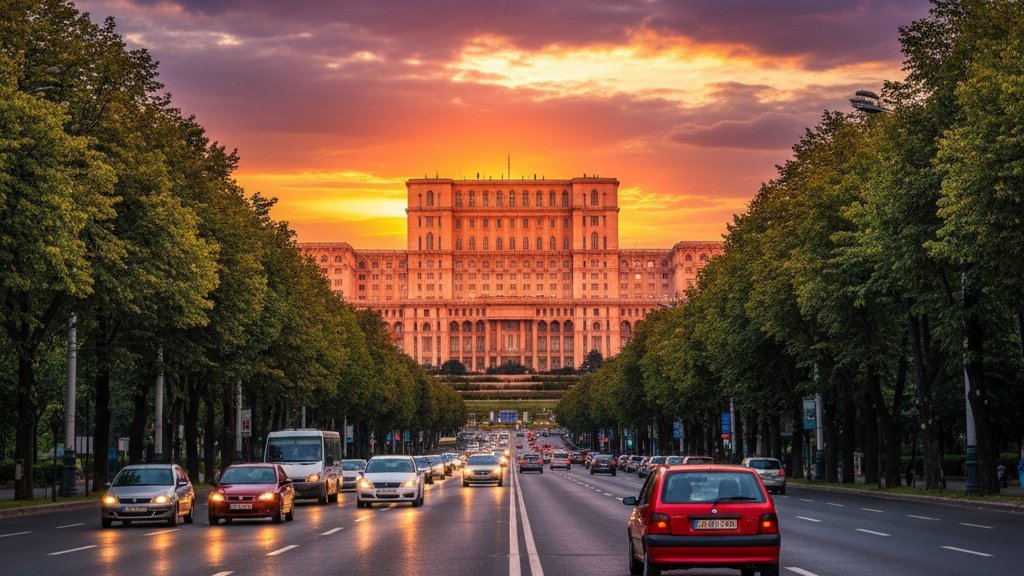
Henri Coanda International Airport OTP lies 18 km north of Piata Universitatii via DN1 and the A3 motorway, a 25- to 35-minute drive depending on traffic. Rental desks cluster in the arrivals hall; some suppliers meet clients outside the terminal with a name board and shuttle to a nearby lot. Downtown offices operate near Gara de Nord railway station and in Sector 1 business districts. Bucharest serves as the hub for trips to the mountains, the coast, and Transylvanian cities, with the A1 motorway running west to Pitesti and Sibiu, the A2 heading east to Constanta and the Black Sea, and the A3 north-west toward Ploiesti and Brasov.
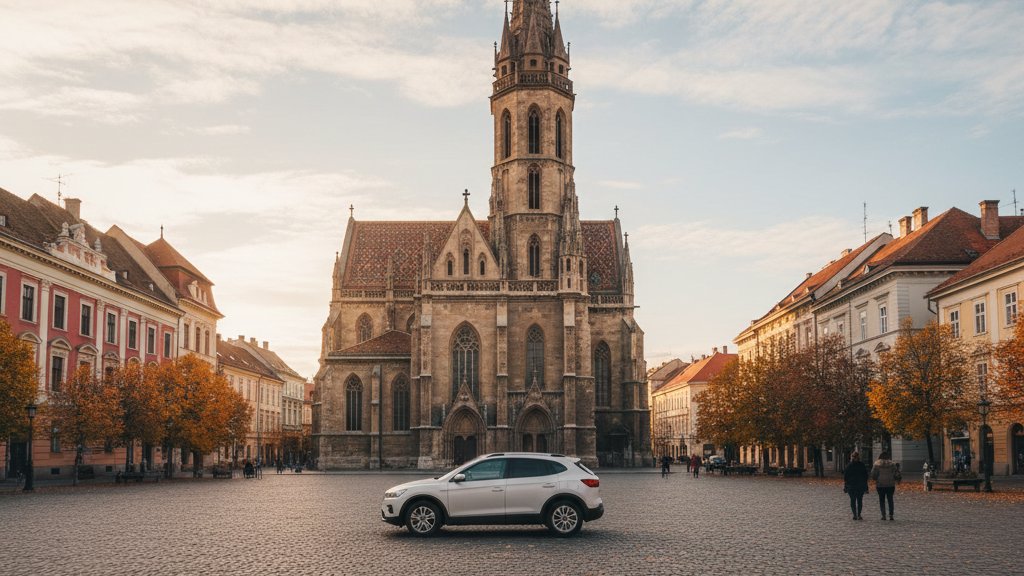
Avram Iancu International Airport CLJ sits 9 km east of the city centre, reachable in 15 minutes on DJ161C and the ring road. Desks open in the terminal; off-airport suppliers arrange a shuttle or hotel delivery. Central Cluj-Napoca offers pickup near Piata Unirii or along Calea Turzii, walking distance from hotels. The city anchors northern Transylvania and provides access to Maramures wooden churches 150 km north on E58, the Apuseni Mountains 90 km west, Turda Gorge and Salina Turda salt mine 30 km south, and Sighisoara 120 km south-east. Rent a car in Cluj Napoca Romania to explore the Babes-Bolyai University district, Art Museum, Botanical Garden, and the Saturday farmers' market, then head into the surrounding hills for fortified churches and traditional villages.
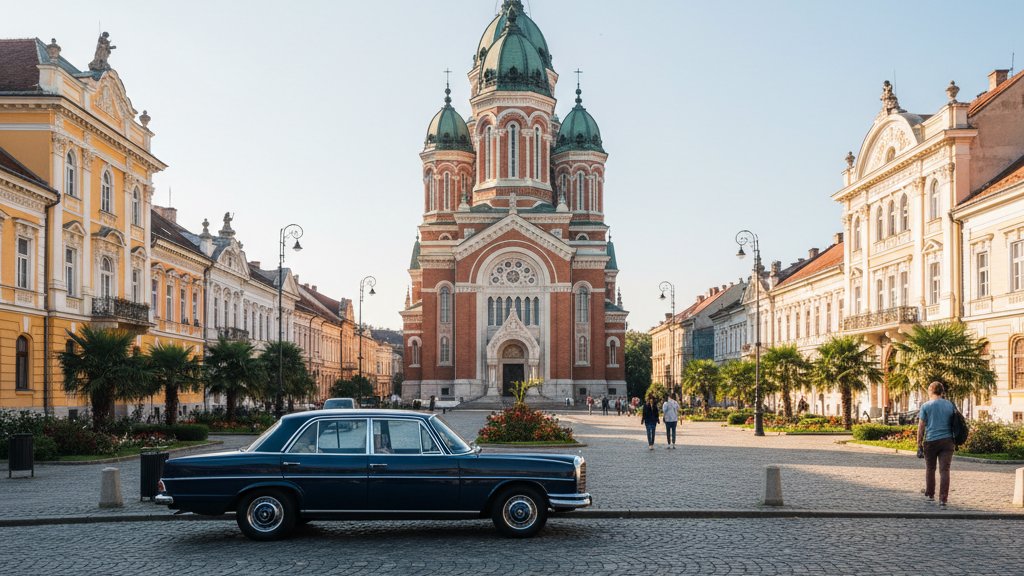
Traian Vuia International Airport TSR lies 12 km north-east of Piata Victoriei, a 20-minute drive on DN69 and the city bypass. Rental counters serve arrivals; some companies offer downtown delivery to hotels near the opera house or along Bulevardul Revolutiei. Timisoara sits close to the Hungarian and Serbian borders, making it a starting point for cross-border trips - confirm the international permit during booking. The city's Baroque squares, Danube river access, and flat Banat plain offer easy driving, and westbound E70 reaches Arad in 55 km, the Hungarian frontier at Nadlac in 45 km, and Serbia's Vrsac crossing in 90 km.
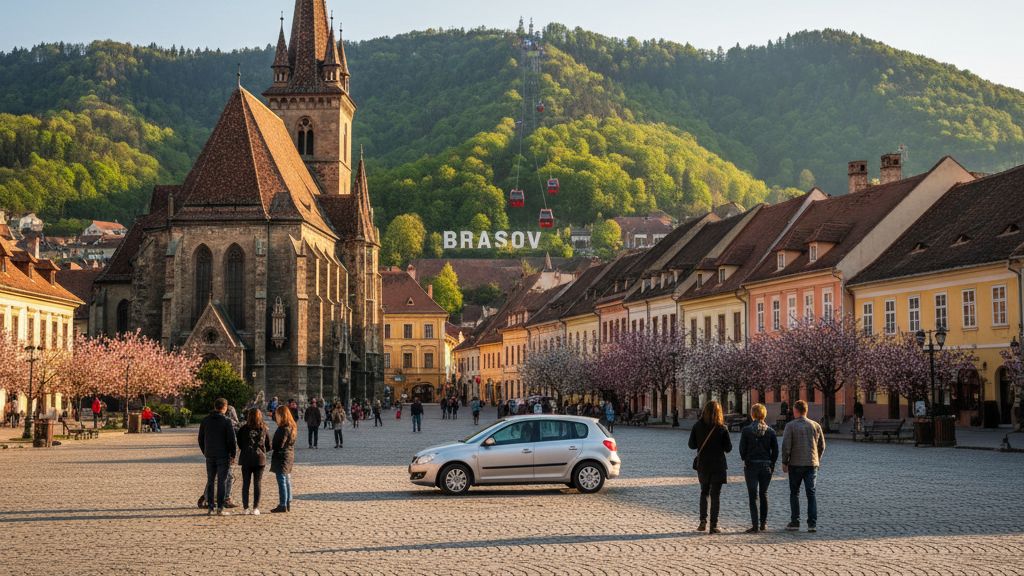
Ghimbav Airport GHV sits 13 km south of Brasov, currently handling limited traffic; most visitors reach Brasov by road or fly into Bucharest OTP 170 km south. Rental offices operate near Piata Sfatului, the railway station or hotel zones, and some suppliers deliver to mountain resorts like Poiana Brasov 12 km south-west. Brasov serves as the gateway to Bran Castle, Rasnov Fortress, Peles Castle in Sinaia, and the Fagaras Mountains. Parking in the old town is restricted; use perimeter lots and walk the pedestrian streets, or base yourself in Poiana Brasov and drive into the city for dinner.
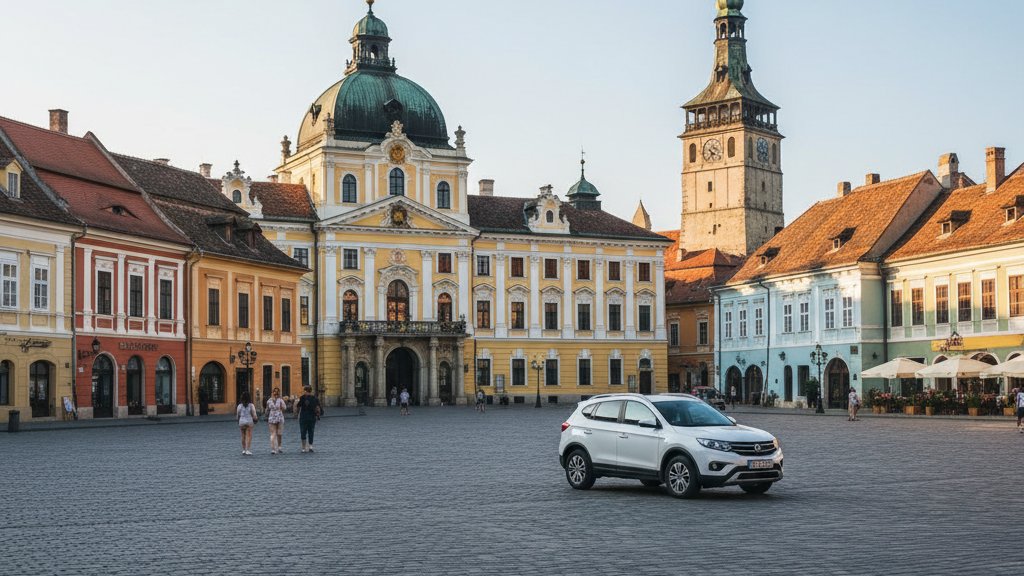
Sibiu International Airport SBZ lies 5 km west of the city centre on DN1, a ten-minute drive. Rental desks open in the small terminal; downtown pickup is available near Piata Mare or the industrial zone. Sibiu anchors the southern Transylvanian plateau and connects to the Transfagarasan DN7C northern entry, the Olt valley eastward to Fagaras, and Sebes 20 km north where the Transalpina DN67C begins. The airport also handles seasonal charters in ski season, and the city hosts festivals in summer, so book vehicles early for May through September and December through March peak weeks.
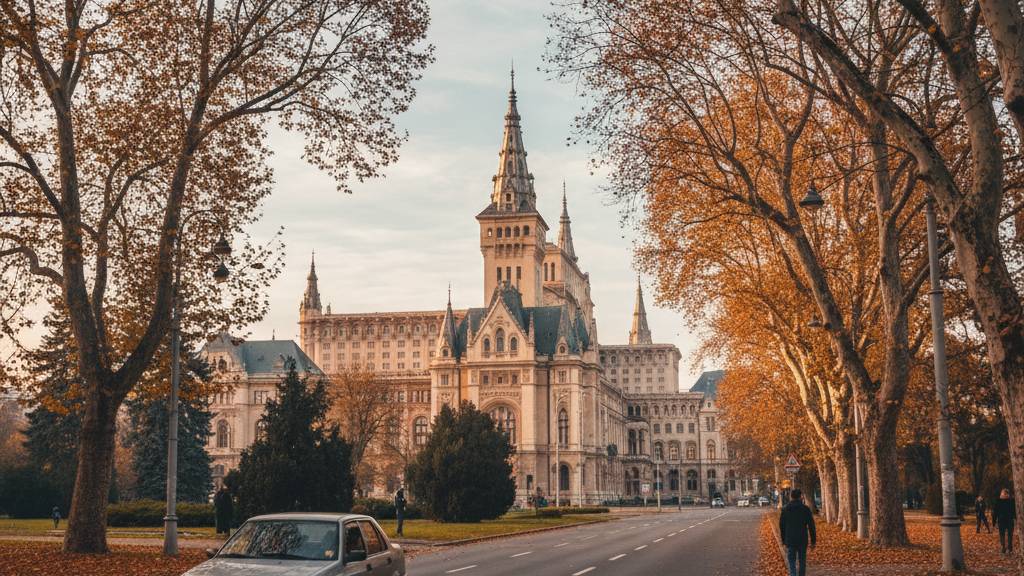
Iasi International Airport IAS sits 8 km east of Piata Unirii, reachable in 15 minutes via DN28. Rental counters serve the terminal; downtown offices cluster near the Palace of Culture and along Bulevardul Stefan cel Mare. Iasi is the largest city in Moldova region and the starting point for trips to the painted monasteries of Bucovina, 130 km north-west via E85 to Suceava, and the Prut river border with the Republic of Moldova at Sculeni, 10 km north-east. The university quarter, botanical garden and three-hill wine route offer city attractions before you head into rural Moldavia.
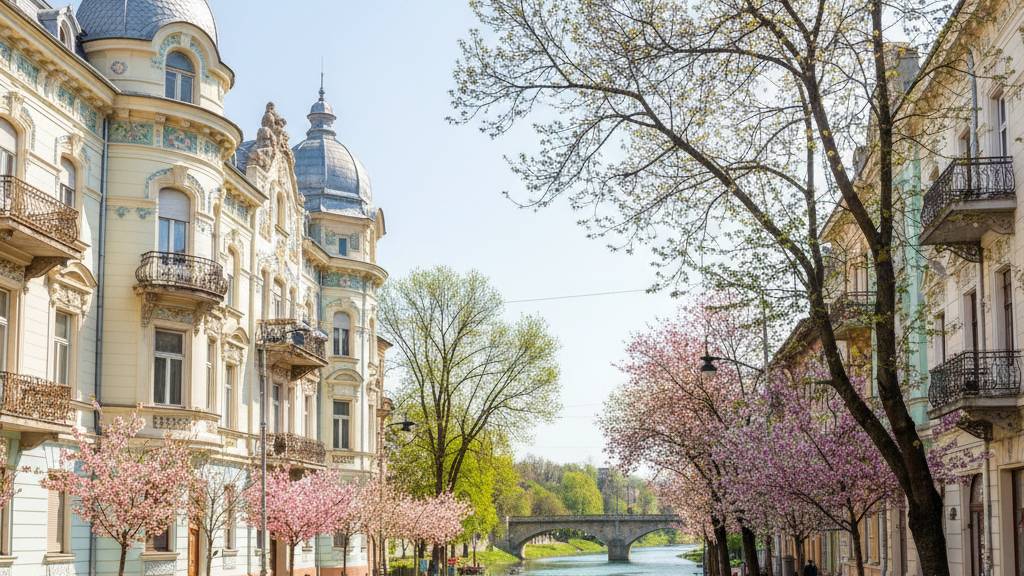
Oradea International Airport OMR lies 5 km west of the city centre on DN76, a ten-minute drive. Rental desks operate in the terminal; some suppliers deliver to hotels near the fortress or along Calea Republicii. Oradea sits at the western edge of the Apuseni Mountains and 10 km from the Bors frontier crossing into Hungary via E60. The city's Art Nouveau architecture, thermal baths and Crisul Repede riverfront fill a day, and day trips reach Baile Felix spa resort 8 km south, Padis karst plateau 100 km east, and Stana de Vale ski area 120 km south-east in the mountains.
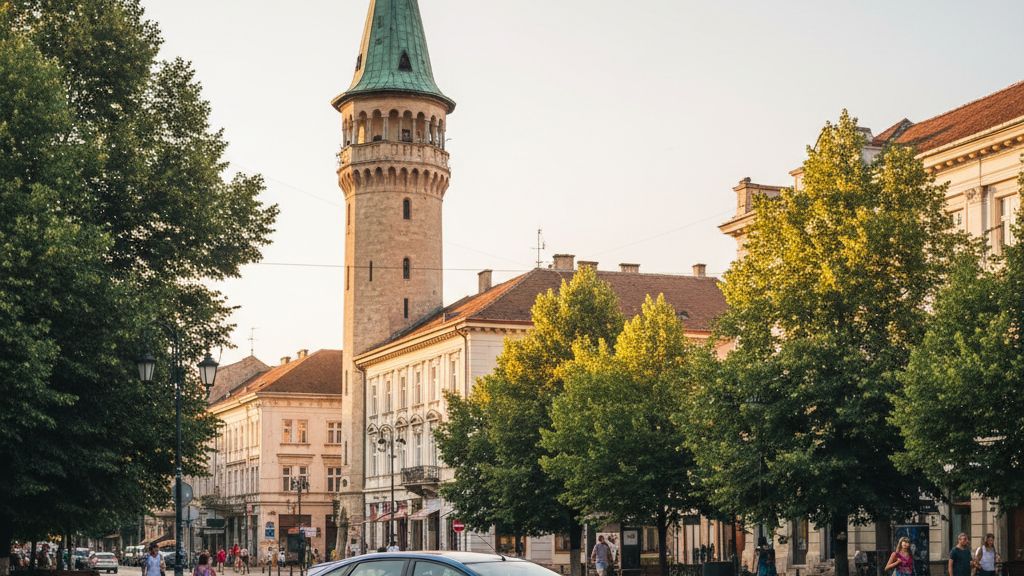
Satu Mare International Airport SUJ lies 12 km south of the city on DN19, serving low-cost and charter flights. Rental availability is smaller than in Bucharest or Cluj-Napoca; search the widget to confirm vehicles for your dates. The city sits near the Hungarian and Ukrainian borders, 20 km from Petea crossing and 30 km from Halmeu. Northern Maramures - Sapanta, Sighetu Marmatiei, and the wooden churches - lies 70 to 100 km east via E58, making Satu Mare an alternative entry point if flights suit your schedule.
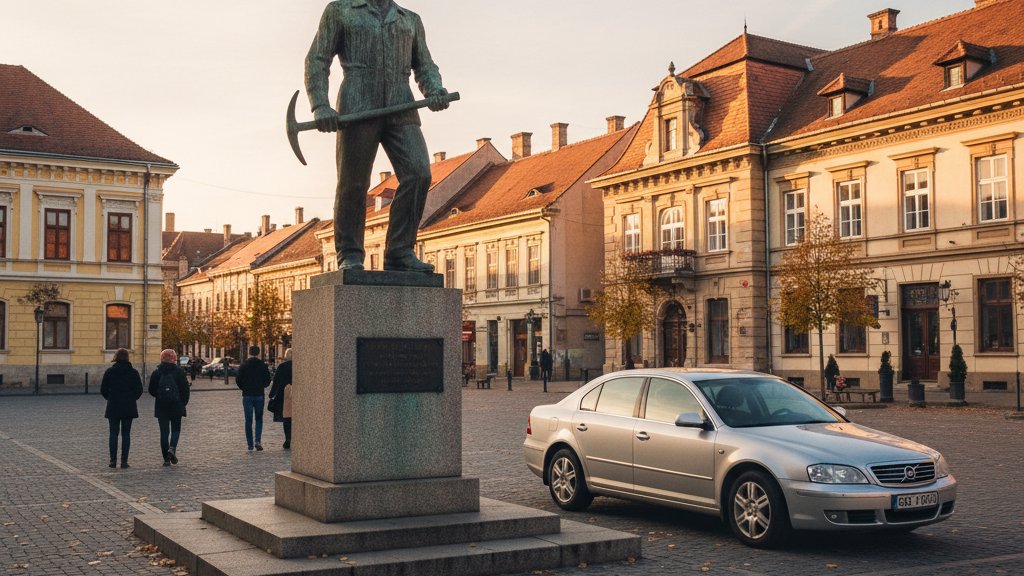
Baia Mare Airport BAY sits 10 km west of the city centre on DN18, handling charter and seasonal routes. Rental desks open when flights arrive; confirm pickup time when you book. Baia Mare is the capital of Maramures county and the closest airport to the wooden churches circuit - Barsana 20 km east, Surdesti 30 km north-east, Sapanta 70 km north - and the Rodna Mountains National Park. The Cavnic ski area lies 25 km east, and the city itself offers a history museum, mining heritage and access to the Tisa river valley.
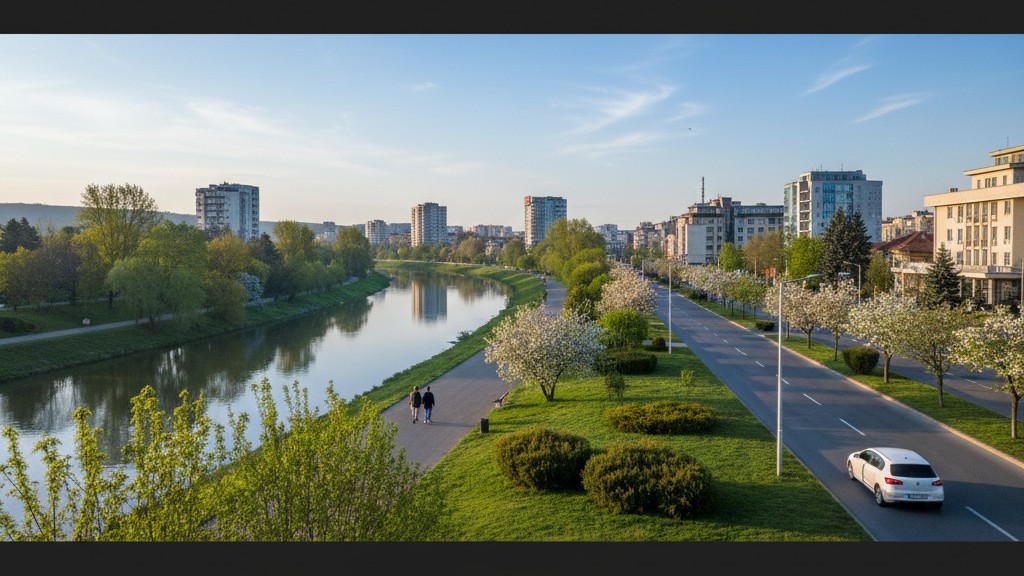
Bacau International Airport BCM lies 5 km south of the city on DN2, a ten-minute drive. Rental desks serve the terminal; city pickup is possible near the railway station. Bacau sits in the Moldova region, midway between Iasi 130 km north and Bucharest 280 km south on E85, and provides access to the Bicaz Gorge and Lacu Rosu 80 km west via DN15, the Ceahlau Massif, and the eastern Carpathians. Rent a car in Bacau to explore the Trotus valley, drive to Piatra Neamt 60 km north-west, or reach the Vrancea wine region 80 km south-west. The city serves as a quieter alternative to Iasi for visitors focused on mountain and rural itineraries.
For more detail visit our FAQ or read traveller experiences on the reviews page; if your question remains unanswered, email [email protected] and we will reply within one business day.
Yes, selected vehicles across Romania carry a "No Deposit" badge in the search results, meaning the local rental company will not place a hold on your card at pickup. Bucharest, Cluj-Napoca and Timisoara provide the widest choice of no-deposit cars because fleet size and turnover allow suppliers to manage risk without freezing funds. Brasov, Sibiu and Iasi offer fewer options but still list no-deposit vehicles during high season. Smaller cities like Satu Mare, Baia Mare and Bacau typically require a credit card and hold, though the filter will surface exceptions if they exist. Each car's payment terms appear in the search result, and the voucher confirms whether a deposit applies.
Certain cars accept a debit card or cash for the balance payment at pickup, removing the credit-card requirement that blocks travellers who carry only Visa Debit or Maestro. The rental company still calculates an excess - the portion of damage cost you would cover - and prints it in the contract, but no hold is placed on your card. This arrangement works because we partner with local operators who review bookings individually, maintain transparent damage records, and find that renters paying with debit cards return vehicles in good condition. Cluj-Napoca, Bucharest and Timisoara offer the most no-credit-card inventory; other cities follow as suppliers expand the policy.
At the time of booking you pay a small advance online by card to confirm your reservation; this advance is non-refundable only if you cancel after the free-cancellation window. The balance - the larger portion of the total - is due when you collect the keys. The payment method for the balance depends on the specific car: some accept debit card or cash, others require a credit card. Every search result displays the allowed methods under "Payment," and the voucher repeats them. If the car permits debit-card payment, bring your Visa Debit or Maestro and government ID; if it requires a credit card, carry Visa or Mastercard credit. Cash payments happen at the desk in Romanian lei or euro, depending on the supplier.
Every driver must present a valid passport, a national driving licence held for the minimum period stated in the car's terms - usually one or two years - and the payment card. An International Driving Permit is not legally required if your licence is in Latin script with a photograph, but we recommend obtaining one because traffic police and rental agents sometimes request it to confirm licence validity, and the IDP costs about 15 euro from your national automobile association. If your licence uses non-Latin script - Cyrillic, Arabic, Chinese - the IDP becomes essential. Age and tenure rules vary by vehicle: economy models often accept 21-plus with one year experience, larger automatics may need 25-plus and two years. The voucher states the exact requirement for your booking.
Most rental companies allow cross-border travel to Hungary, Bulgaria and Serbia with written permission, arranged as a paid extra during booking - look for "cross-border permit for Hungary, Bulgaria, Serbia" in the options list. The permit costs a fee per country and per rental period, and the rental contract must list the approved countries. EU borders between Romania and Hungary or Bulgaria require no customs stop, but the rental company needs the permit on file for insurance coverage outside Romania. Serbia remains outside the EU, so the border involves passport control; the permit covers that crossing as well. Notify the rental company at pickup if you plan to cross; driving without a permit may void insurance and incur fines. Travelling to Ukraine or Moldova typically is not allowed; check the terms for each car.
When you land at Henri Coanda OTP, collect your luggage and proceed to the arrivals hall. Rental desks for major suppliers line the wall opposite the exit; 4Drive partners appear under their local company name - the voucher states which counter or whether a representative meets you outside with a name board. If the supplier operates off-airport, a shuttle drives you 5 to 10 minutes to the car lot. Present your voucher, passport, licence and payment card, sign the contract after the walk-around inspection, and receive the keys. The entire process takes 15 to 30 minutes if documents are ready and the car is prepared. Return happens at the same location; follow airport signs for "Rent a Car Return" and park in the designated zone, or return downtown if your contract specifies city drop-off.
The Transfagarasan DN7C is paved and open roughly June to October; during that window a front-wheel-drive hatchback or sedan handles the road, though a Dacia Duster or crossover with higher clearance feels more confident on broken pavement and offers better views. Four-wheel drive is not required in summer. In winter the pass closes due to snow, and alternative routes - DN1 via Sibiu, E68 via Petrosani - remain open with winter tyres. If you plan gravel forest roads, the Transalpina DN67C or remote monastery access, a Duster AWD or another SUV with selectable four-wheel drive adds traction and ground clearance. For city and motorway driving, front-wheel drive suffices year-round; winter tyres are mandatory November through March in mountain areas, and rental companies fit them automatically during those months.
Yes, every booking includes free cancellation up to the deadline stated in your confirmation email - typically 48 or 72 hours before the scheduled pickup time. Cancel online through the link in the email, and the advance refunds to the card you used within five to seven business days. If you cancel after the deadline or fail to show up, the advance becomes non-refundable, but the balance is never charged. We recommend booking early to secure no-deposit cars during peak season - July, August, Christmas, New Year and Easter - then adjusting dates if plans change, because free cancellation protects your advance as long as you notify us in time.
The motorway vignette, called Rovinieta, is required for all vehicles using national roads classed as DN and motorways classed as A. Some rental companies include the vignette in the quoted rate and hand you a printed confirmation at pickup; others offer it as a paid extra during booking - look for "motorway vignette (Rovinieta)" in the options list - or expect you to buy it yourself online at roviniete.ro before you start driving. If the car's terms state "vignette included," you receive proof of purchase with the rental documents. If it is not included and you forget to buy it, traffic police and border officers can fine you several hundred lei on the spot. Check the voucher or ask at the desk, and keep the vignette confirmation in the glove box.
One-way rentals - picking up in one city and returning in another - are possible between major locations like Bucharest, Cluj-Napoca, Timisoara, Brasov, Sibiu and Iasi, subject to supplier approval and a one-way fee. During the search, select your pickup city and a different drop-off city; the widget will filter results to operators that allow the route and display any applicable fee in the breakdown. One-way fees vary by distance and demand: Bucharest to Cluj-Napoca may cost less than Bucharest to Satu Mare because Cluj-Napoca sees more bookings and balancing the fleet is easier. If the one-way option does not appear for your dates, the supplier may not support that route or all cars are committed; try reversing the direction or booking a round-trip from one city and using public transport for the return leg.
From the Black Sea coast to the Carpathian ridges, from medieval citadels to delta channels, Romania unfolds at the pace you set behind the wheel. Search no-deposit and no-credit-card vehicles across ten cities, compare transmission and luggage options, add a motorway vignette or child seat, pay a small advance online, and collect your keys at the airport or downtown desk. Local rental companies, transparent contracts and flexible payment methods turn every search into a confirmed booking, every booking into a voucher, and every voucher into the freedom to explore painted monasteries, mountain passes and fortified churches on your own schedule.